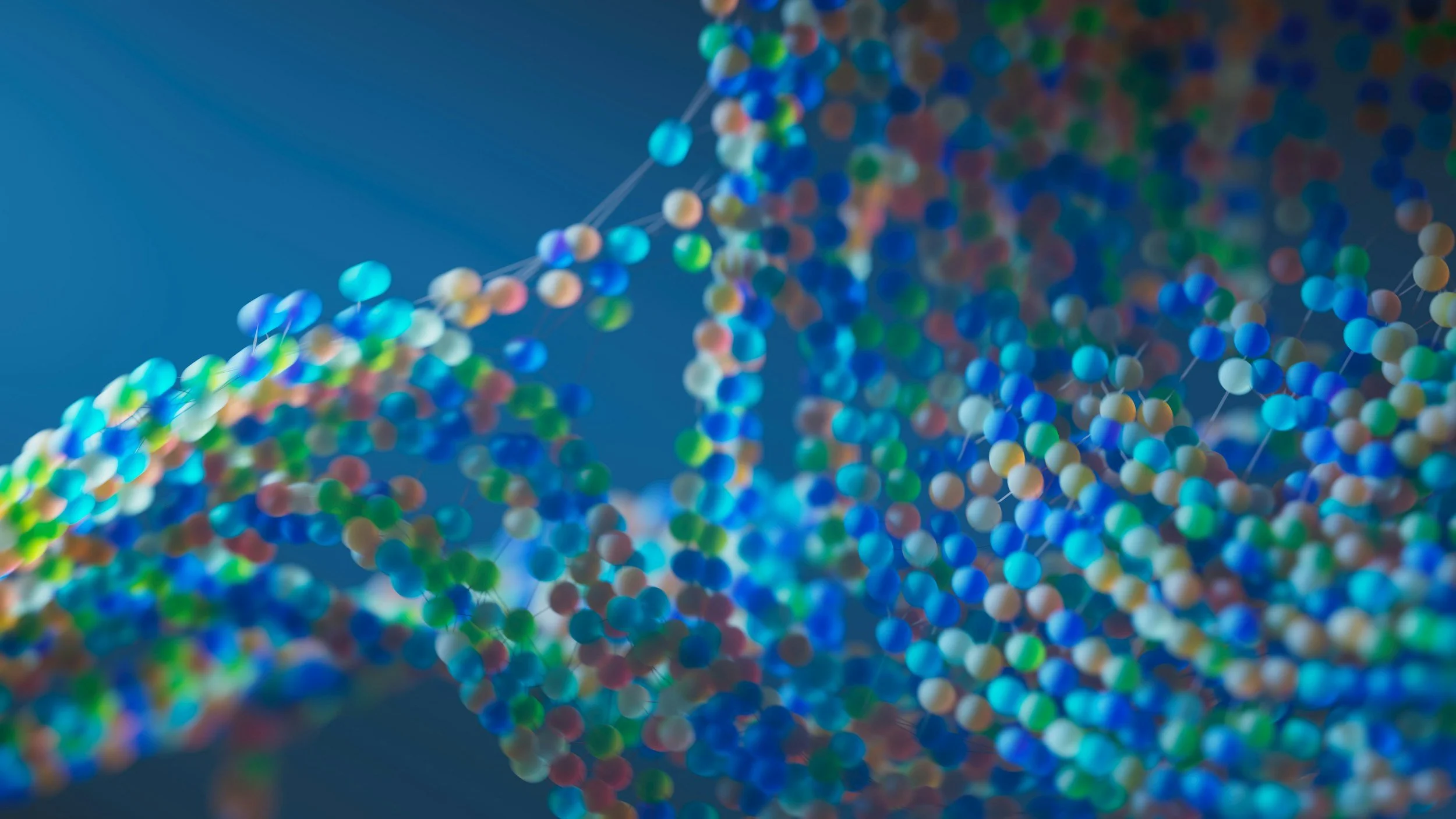
The Triadic Engine Inside Your Cells
A protein machine that assembles the scaffolding of life turns out to work in a way unexpectedly consistent with how an unlikely theory says persistence requires.

3 Kinds of Meaning
When meaning starts doing too much, systems fail quietly first.
In January, a small community in Quilicura, Chile ran a one-day experiment replacing automated AI responses with real people.
The point wasn’t a solution or a stance - it was to surface the human and material constraints underneath systems that usually feel frictionless.
It revealed about how meaning behaves under strain.
Three kinds of meaning are always present:
• Indicative - what reality implies
• Relational - what we do
• Semantic - what we say
Problems begin when semantic meaning stays clear while the other two lag - and coherence gets mistaken for stability.

On Possible
Before you can ask what something is, there is a quieter and more difficult question:
How does it become possible at all?
Not imaginable. Not theoretically allowed. Not rhetorically appealing.
Possible in the only sense that finally matters: able to appear, able to hold together, able to continue under pressure.
That is where UTCP begins.
UTCP — the Universal Theory of Constrained Possibility — starts from a simple claim with large consequences:
Nothing endures for free.

The Meaning Layer Is Real. Don’t Trust It Yet.
There is a growing mismatch between how much information modern systems produce and how little attention we pay to the moment when that information is turned into meaning.

Why Hazard Semantics Is Emerging Now
The absence of Hazard Semantics in earlier eras was not a mistake. The conditions that demand it - scale, speed, coupling, visibility - are relatively recent.

Consciousness Is Just Another Sense (And That Changes Everything)
The visible spectrum, we're told, breaks into seven colors: red, orange, yellow, green, blue, indigo, violet. It's a tidy acronym—ROYGBIV—and we learn it as though nature arrived with built-in compartments.
But nature doesn't.
What Hazard Semantics Is Not
Hazard Semantics is a distinct interpretive discipline. It is not a rebranding of existing risk, data, or decision frameworks. Clarifying what it is not is essential to understanding what it is.

What is Hazard Semantics?
Hazard Semantics is a newly articulated interpretive discipline concerned with this problem: how meaning forms across multiple domains under complex conditions, and how that meaning can fail even when every underlying signal is technically correct.